French tips have stayed a wardrobe staple in nail art for decades, and they’ve only broadened since. What used to mean a single white line across the tip now covers a whole family of looks, from the original classic to reverse, micro, and coloured variations. Whether you’re doing your own nails or training to do them for clients, the technique underneath all of these variations is the same, and it’s worth learning properly. This guide walks through the process, and where a French tips nails course genuinely adds value beyond following a tutorial.
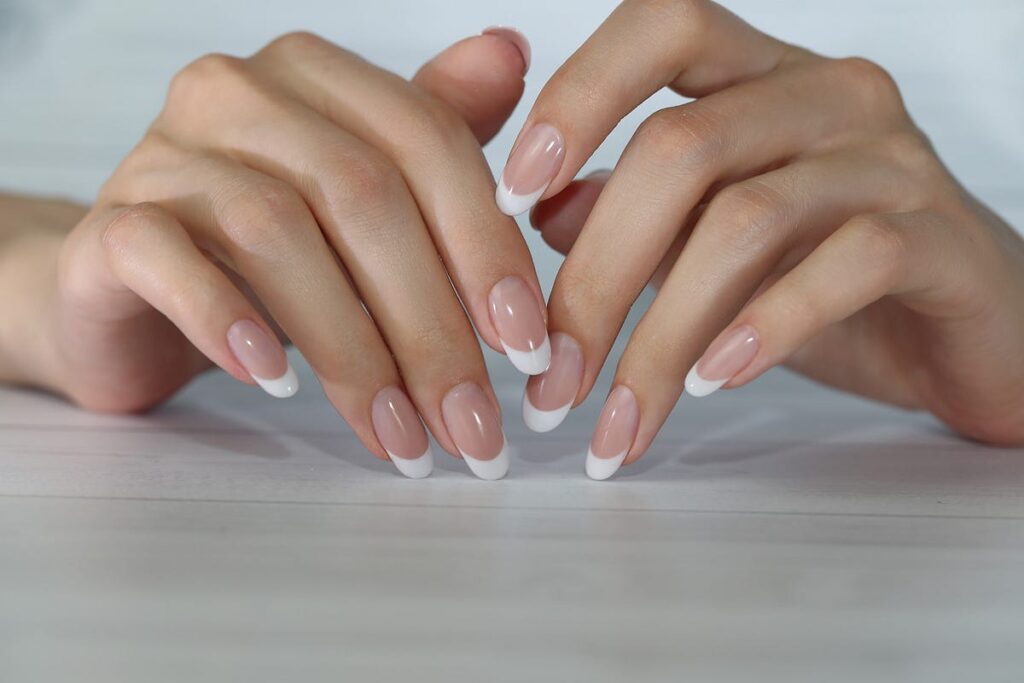
Step-by-Step Guide to Creating French Tips Nails
1. Gather Your Tools
| Tool | Purpose |
| Nail clippers and file | Shaping and length |
| Cuticle pusher | Clean, tidy cuticle line |
| Base coat | Protects nails, improves polish grip |
| White polish or gel | The classic tip colour |
| Nude or pink polish | The base shade |
| Top coat | Seals and adds shine |
| Nail art brush or French tip guides/tape | Precision for the tip line |
Guides and stick-on tape tend to give more consistent results for beginners than freehand brushwork, worth trying both to see which suits your hand.
2. Prepare Your Nails
Trim and file to your preferred shape and length, keeping all nails even. Gently push back the cuticles, then apply a base coat. This step protects the natural nail and gives the polish something to hold onto, skipping it is one of the more common reasons French manicures chip early.
3. Apply Your Base Colour
Once the base coat has dried, apply one or two thin coats of nude or pink polish, letting each layer dry fully before adding the next. Thin, patient coats give a cleaner, more even finish than one thick layer, which tends to pool near the cuticle and take far longer to dry properly.
4. Create the Tips
This is the step that defines the whole look, and there’s more than one way to do it well.
- Freehand with a brush – Paint the tip in one confident stroke, starting from one side of the nail and following its natural curve. Takes practice but gives the most control for custom shapes.
- Tape or guides – Place the guide roughly a quarter of an inch from the tip, apply the white polish over it, and remove the tape before the polish sets. This method gives sharper, more consistent lines, particularly useful for symmetrical looks across all ten nails.
- Stamping tools – Some technicians now use silicone stamping tips for very fine, uniform lines, especially useful on shorter nails where freehand precision is harder.
5. Finish with a Top Coat
Once the tips are fully dry, seal the design with a top coat. This adds shine, protects the design, and extends how long the manicure lasts before chipping starts.
French Tip Variations Worth Knowing
The classic white tip is still the most requested version, but a few variations have become just as popular with clients:
- Reverse French – The colour sits at the cuticle rather than the tip, creating a smile-line effect.
- Micro French – A very thin tip line, subtler than the classic version and popular for everyday wear.
- Coloured French – Swapping white for pastel, metallic, or bold tones instead of the traditional look.
- Diagonal or angled tips – A slanted line rather than a straight one, giving a more modern, editorial finish.
Knowing all of these, not just the original, is what separates a nail technician who can meet most client requests from one who can only offer the one look.
Common Mistakes to Avoid
- Applying the tip line too thick, which looks heavy rather than crisp.
- Not letting the base colour dry fully before adding the tips, causing smudging.
- Removing tape too late, after the polish has started to set.
- Uneven tip height across the ten nails, which is one of the first things clients notice.
Aftercare Tips
A French manicure lasts longer with a little upkeep. Apply cuticle oil daily to keep the surrounding skin hydrated, avoid using nails as tools (opening cans, scratching off labels), and wear gloves for washing up or cleaning to protect both the polish and the nail underneath. With gel versions, book a fill or reapplication around the two to three week mark rather than waiting for visible lifting.
Why Take a French Tips Nails Course?
Advanced Nail Technician Certification
Going beyond basic nail care through certification builds a deeper understanding of shaping, design work, and the health and safety standards expected in a professional setting.
Comprehensive Techniques
A proper nail artist course covers French tips alongside a much wider range of designs and finishes, building a repertoire that can meet different client requests rather than just one look.
Hands-On Experience
Courses that include hands-on practice, on real clients or practice hands, matter more than video tutorials ever will. Muscle memory for a clean tip line only comes from repetition.
Networking Opportunities
A nail extension course in Dubai also puts you in a room with other people building the same career, which tends to lead to job leads and collaborations further down the line.
FAQs
Q: What is included in an advanced nail technician certification?
It typically covers advanced shaping and design techniques, sanitation and hygiene practices, product knowledge, and client consultation skills.
Q: Are nail art courses suitable for beginners?
Yes. Most nail artist courses are built to take someone from no experience through to a solid working foundation.
Q: How long do nail art courses usually last?
This varies by curriculum, but a nail art course in Dubai typically runs from a few weeks to a couple of months.
Q: What skills can I expect to learn in a nail extension course in Dubai?
A nail extension course in Dubai covers extension techniques including gel and acrylic, along with how to incorporate designs such as French tips into finished sets.
Q: Do French tips work on all nail shapes?
Yes, though the line typically needs adjusting to follow the shape. Square and almond shapes tend to hold a straight classic line well, while rounder shapes often suit a slightly curved tip better.
Conclusion
French tips combine precision with a look that never really goes out of style, and there’s now enough variation within the style that it rarely looks repetitive across clients. Getting the technique right, whichever version you’re doing, comes down to patience with the base coat and a steady hand (or the right tools) for the tip line.
At Cosmeza Beauty Institute, our nail art course in Dubai covers this technique properly, alongside the wider skill set needed to work professionally in the industry. If you’re serious about building a career in nails, it’s worth starting there rather than piecing it together from tutorials.